Seven areas of work, and the named programmes inside them
सात कार्यक्षेत्र, और उनके भीतर के नामित कार्यक्रम
Each one is declared in the samiti's constitution and carries specific, named programmes that district and block units run.
ये किसी विवरणिका के लिए चुने गए विषय नहीं हैं। हर एक समिति के संविधान में घोषित है और उसके भीतर विशिष्ट नामित कार्यक्रम हैं, जिन्हें ज़िला और प्रखंड इकाइयाँ चलाती हैं।
01 · Elementary education01 · प्रारंभिक शिक्षा
प्रारंभिक शिक्षा
Elementary education
Children's platforms that run continuously, teacher training, and two decades of building public pressure for a Right to Education law and then for its implementation.
लगातार चलने वाले बाल-मंच, शिक्षक प्रशिक्षण, और शिक्षा के अधिकार क़ानून के लिए — और फिर उसके क्रियान्वयन के लिए — दो दशकों से जनदबाव बनाने का काम।
Bal Melaबाल मेला
Children's fairs — public events where children present, demonstrate and compete, and where the community sees what its own children can do.
बच्चों के मेले — ऐसे सार्वजनिक आयोजन जहाँ बच्चे प्रस्तुति देते, प्रयोग दिखाते और प्रतिस्पर्धा करते हैं, और समुदाय देखता है कि उसके अपने बच्चे क्या कर सकते हैं।
Bal Manchबाल मंच
Children's forums — run as ongoing platforms, not one-off events. This is where the education work becomes continuous rather than seasonal.
बाल मंच — निरंतर चलने वाले मंच, कोई एक-बार का आयोजन नहीं। यहीं शिक्षा का काम मौसमी न रहकर लगातार चलने वाला बनता है।
Seekhne ka Mazaसीखने का मजा
“The Joy of Learning” — the samiti's pedagogic approach, aimed at making school something children want rather than something they are sent to.
“सीखने का मजा” — समिति की शिक्षण पद्धति, जिसका उद्देश्य है कि स्कूल बच्चों के लिए भेजी जाने वाली जगह नहीं, चाही जाने वाली जगह बने।
Teacher-trainer programmesशिक्षक-प्रशिक्षक कार्यक्रम
Teacher-trainer programmes, delivered through district and block units and their own trained cadre.
शिक्षक-प्रशिक्षक कार्यक्रम, जो ज़िला और प्रखंड इकाइयों तथा उनके अपने प्रशिक्षित कार्यकर्ताओं के माध्यम से चलाए जाते हैं।
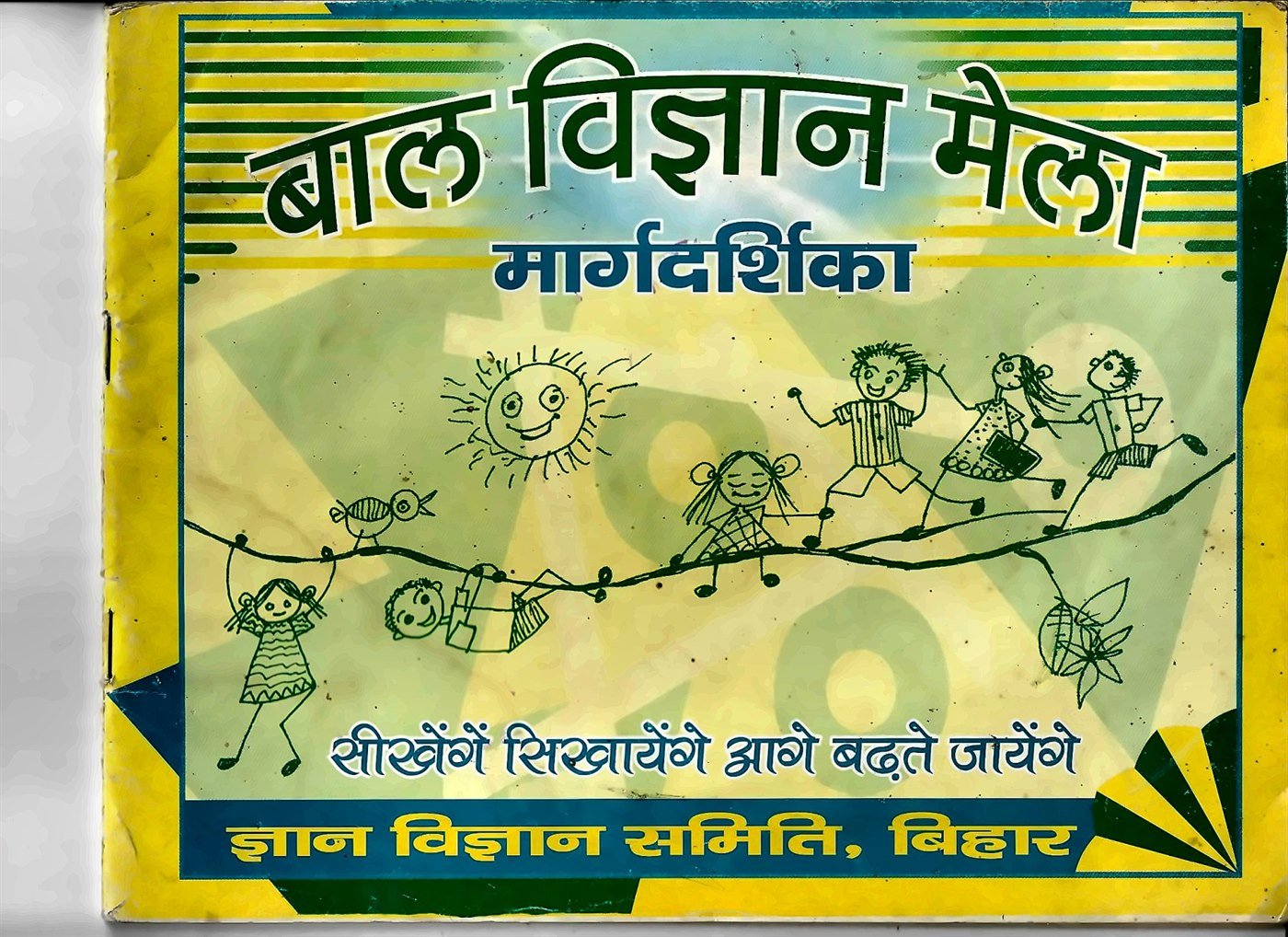
Children's Science Fair: A Guidebook (बाल विज्ञान मेला: मार्गदर्शिका) — a printed guidebook for running children's science fairs, published by the samiti. Strapline: “सीखेंगें सिखायेंगें आगे बढ़ते जायेंगे” — “we will learn, we will teach, we will keep moving ahead”. The method is codified in published material.बाल विज्ञान मेला: मार्गदर्शिका — बाल विज्ञान मेला आयोजित करने की मुद्रित पुस्तिका, समिति द्वारा प्रकाशित। ध्येय वाक्य: “सीखेंगें सिखायेंगें आगे बढ़ते जायेंगे”। यह प्रमाण है कि पद्धति प्रकाशित सामग्री में दर्ज है — हर ज़िले में नए सिरे से गढ़ी नहीं जाती।
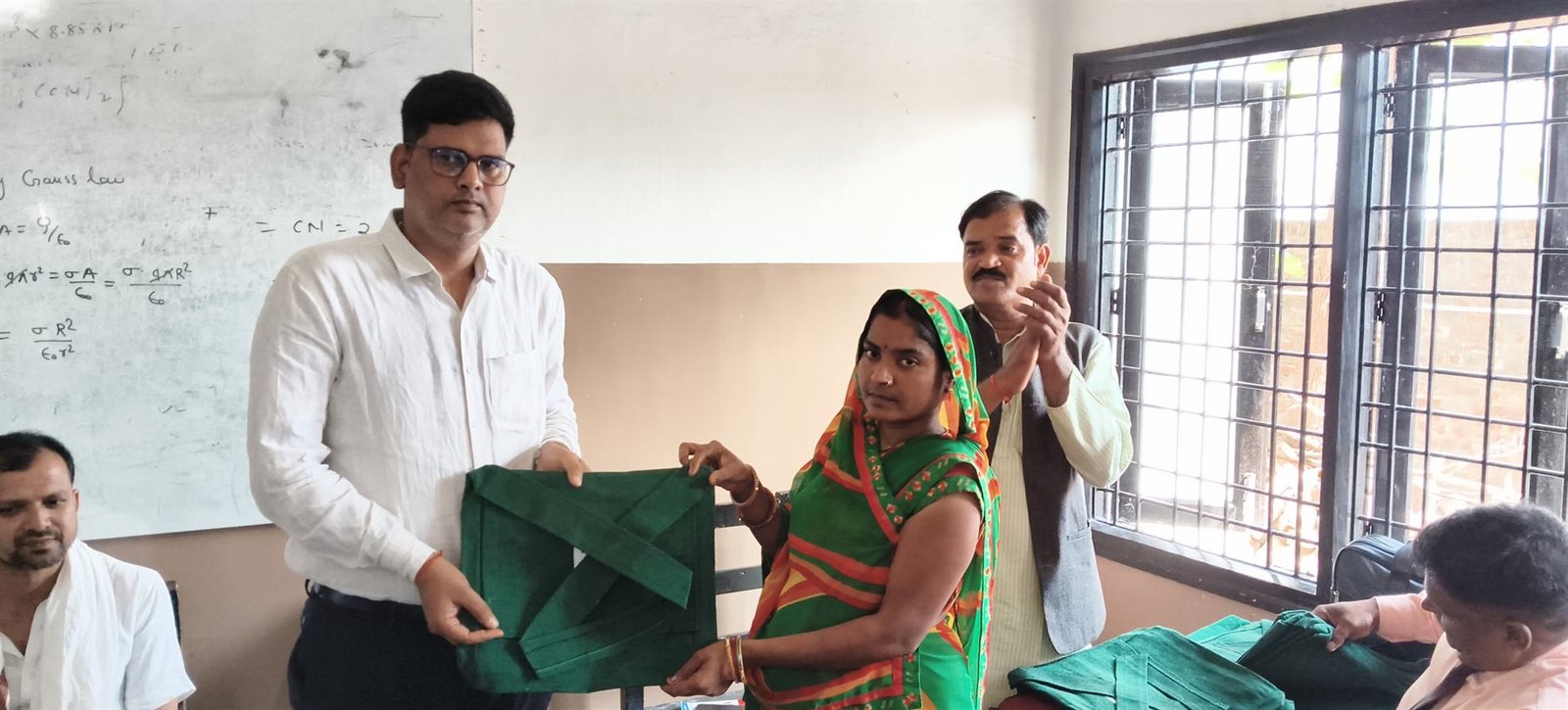
Learning material handed over at a training session, 15 May 2026.प्रशिक्षण सत्र में अध्ययन सामग्री का वितरण, 15 मई 2026।
02 · Literacy02 · साक्षरता
साक्षरता
Literacy
The mass-campaign literacy model derived from Ernakulam, where a cultural campaign creates the demand for literacy before the teaching begins.
साक्षरता जन अभियान मॉडल — एर्नाकुलम से लिया गया जन-अभियान का तरीक़ा, जिसमें पढ़ाई शुरू होने से पहले सांस्कृतिक अभियान साक्षरता की माँग पैदा करता है।
In this model, literacy is never taught by itself. Alongside reading and writing, the campaign builds consciousness, awareness, the capacity to act, a scientific outlook and a coherent view of the world — with sustained work against superstition running through all of it.
इस मॉडल में साक्षरता कभी अकेले नहीं सिखाई जाती। पढ़ने-लिखने के साथ-साथ अभियान चेतना, जागरुकता, क्रियात्मकता, वैज्ञानिक दृष्टिकोण और सम्यक विश्वदृष्टि का निर्माण करता है — और इन सबके भीतर सतत अंधविश्वास निवारण चलता रहता है।
Statewide coverageराज्यव्यापी विस्तारThe samiti covered districts across Bihar — and, before the 2000 bifurcation, undivided Bihar including present-day Jharkhand — through three successive national campaigns: Gyan Vigyan Jatha 1990, the Total Literacy Campaign, and Saakshar Bharat Yatra 2012.समिति ने बिहार भर के ज़िलों में — और सन् 2000 के विभाजन से पहले, आज के झारखंड सहित अविभाजित बिहार में — तीन क्रमिक राष्ट्रीय अभियानों के माध्यम से काम किया: ज्ञान विज्ञान जत्था 1990, पूर्ण साक्षरता अभियान, और साक्षर भारत यात्रा 2012।
Work on gender equality and against the oppression and exploitation of women runs across every other programme. Specific to this area:
लैंगिक समानता तथा महिलाओं के दमन और शोषण के विरुद्ध काम हर दूसरे कार्यक्रम में मौजूद है। इस क्षेत्र के अपने कार्यक्रम:
Self-help group formation, carried out with formal permission from the Gaya district administration.
A savings movement built around those groups.
Leadership development — several women trained by the samiti have gone on to be elected as Panchayati Raj representatives.
स्वयं सहायता समूहों का गठन, गया ज़िला प्रशासन की औपचारिक अनुमति से।
बचत आंदोलन — उन्हीं समूहों के इर्द-गिर्द खड़ा किया गया बचत का आंदोलन।
नेतृत्व विकास — समिति से प्रशिक्षित कई महिलाएँ आगे चलकर पंचायती राज प्रतिनिधि चुनी गईं।
04 · Development04 · विकास
विकास
Development
The samiti defines development work not as the delivery of schemes but as the building of capability:
विकास के काम की समिति की परिभाषा असामान्य है और उसे ठीक-ठीक कहना ज़रूरी है: यह योजनाओं का वितरण नहीं, क्षमता का निर्माण है।
…building among common people the capacity to acquire information on all aspects of development, analyse it, take decisions and act.
The samiti's working principle
…आम लोगों में विकास के सभी पहलुओं की जानकारी हासिल कर उसका विश्लेषण करने, निर्णय लेने और कार्यवाही करने की दक्षता विकसित करना।
समिति का कार्य सिद्धांत
In practice this shows up as survey work, planning training and information campaigns — including a seven-district, multi-sector mobile survey run under the NITI Aayog Aspirational District Programme.
व्यवहार में यह सर्वेक्षण, योजना-निर्माण प्रशिक्षण और सूचना अभियानों के रूप में सामने आता है — जिसमें नीति आयोग के आकांक्षी ज़िला कार्यक्रम के अंतर्गत सात ज़िलों का बहु-क्षेत्रीय मोबाइल सर्वेक्षण भी शामिल है।
05 · Panchayati Raj05 · पंचायती राज
पंचायती राज
Panchayati Raj
A four-tier organisation working inside a three-tier system of local government. The samiti's panchayat work is training and planning, done with government departments rather than around them.
त्रिस्तरीय स्थानीय शासन व्यवस्था के भीतर काम करता एक चार-स्तरीय संगठन। समिति का पंचायत-कार्य प्रशिक्षण और योजना-निर्माण का है, जो सरकारी विभागों के साथ मिलकर किया जाता है — उन्हें दरकिनार करके नहीं।
Training on Panchayati Raj law for elected representatives and members.
Identification of panchayat resources — what a panchayat has to work with.
“Desh ko Jano – Desh ko Badlo” — know the country, change the country: an information and awareness campaign.
BRGF planning training at panchayat, block and district level, with the Planning Commission and the Panchayati Raj Department, under the Backward Region Grant Fund (BRGF) — including preparation of a model plan built by scheme convergence.
निर्वाचित प्रतिनिधियों और सदस्यों के लिए पंचायती राज क़ानून पर प्रशिक्षण।
पंचायत संसाधनों की पहचान — पंचायत के पास वास्तव में क्या है, इसका आकलन।
“देश को जानो – देश को बदलो” — सूचना एवं जागरूकता अभियान।
योजना आयोग तथा पंचायती राज विभाग के साथ, पिछड़ा क्षेत्र अनुदान निधि (BRGF) के अंतर्गत पंचायत, प्रखंड और ज़िला स्तर पर योजना-निर्माण प्रशिक्षण — जिसमें योजनाओं के अभिसरण से बना एक आदर्श प्लान तैयार करना भी शामिल है।
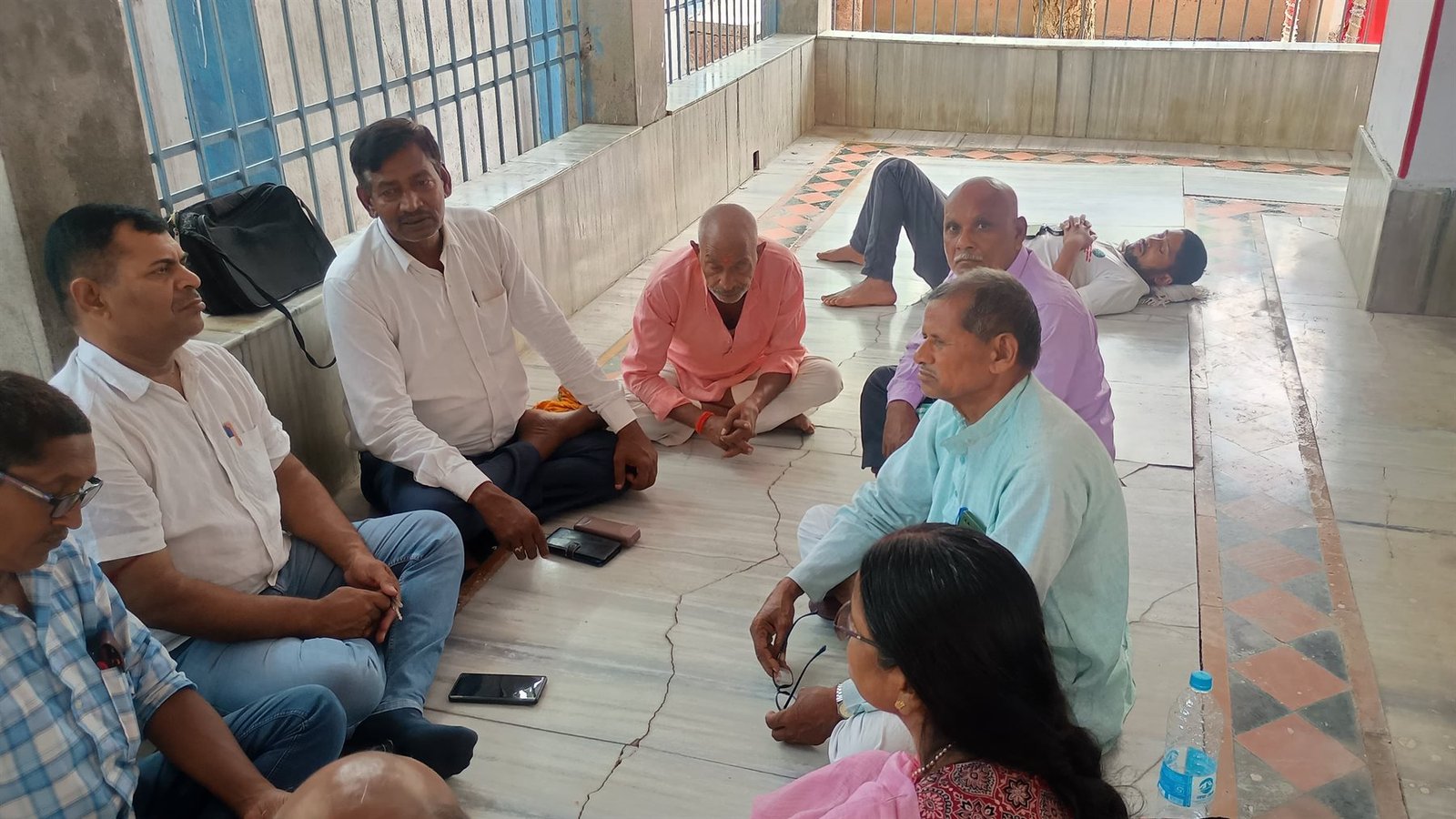
A working meeting, 12 June 2026.एक कार्य बैठक, 12 जून 2026।06 · Human rights06 · मानव अधिकार
मानव अधिकार
Rights campaigns
Awareness campaigns on the Right to Information, the Right to Food and the Right to Health. Bharat Gyan Vigyan Samiti is a member of the Jan Swasthya Abhiyan, the Indian circle of the People's Health Movement.
सूचना का अधिकार, भोजन का अधिकार तथा स्वास्थ्य का अधिकार — इन पर जागरूकता अभियान। भारत ज्ञान विज्ञान समिति जन स्वास्थ्य अभियान की सदस्य है।
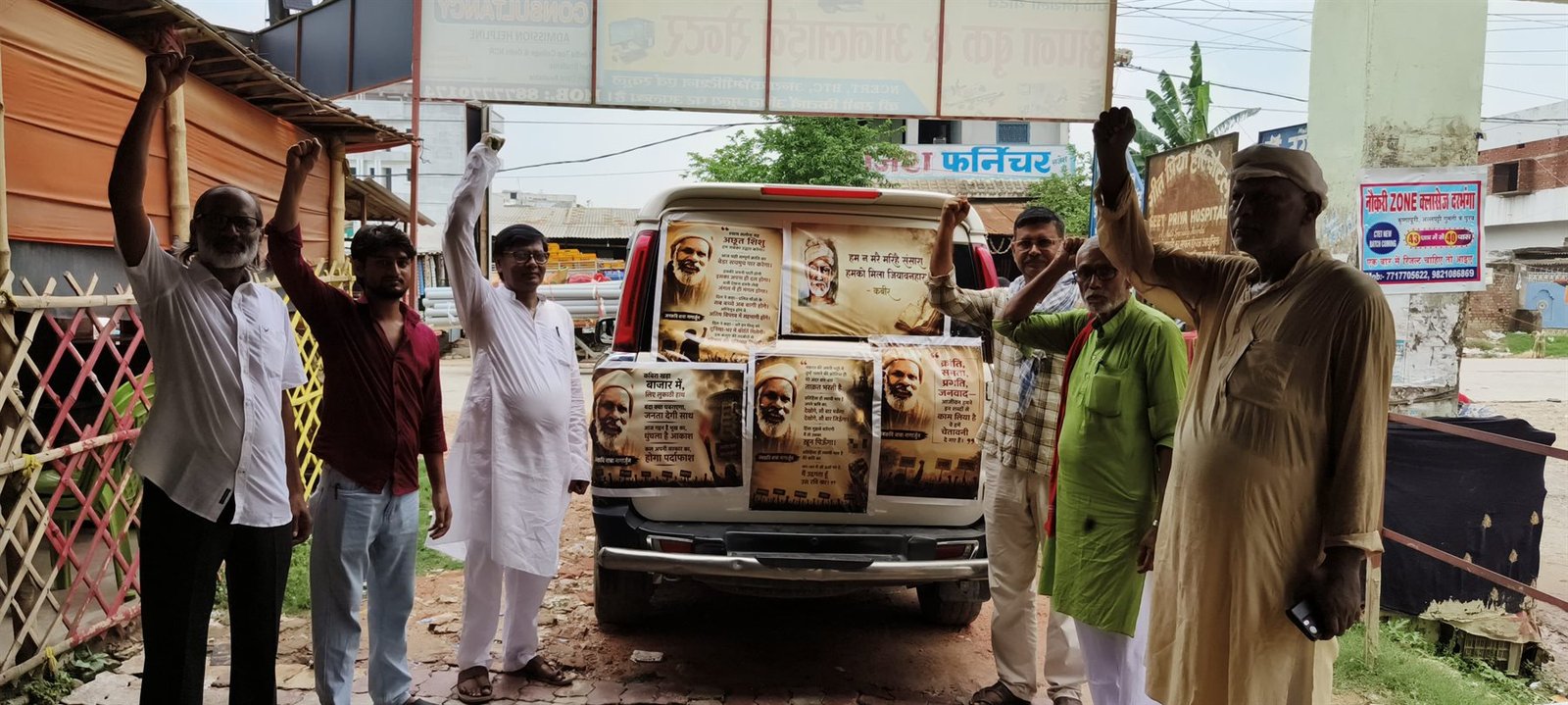
A poem, driven through town. Verses of the people's poet Nagarjun and of Kabir pasted across a vehicle for his birth anniversary, June 2026 — the Kala Jatha method in its simplest modern form.कविता, जो शहर में घूमती है। जनकवि बाबा नागार्जुन की जयंती पर उनकी और कबीर की पंक्तियाँ एक वाहन पर चिपकाकर निकाली गईं, जून 2026 — कला जत्था पद्धति का आज का सबसे सरल रूप।
07 · Culture & environment07 · संस्कृति एवं पर्यावरण
संस्कृति एवं पर्यावरण
Culture & environment
Culture is not decoration around the programmes here. It is the delivery mechanism. The Ernakulam method worked because Kalajatha — cultural troupes performing in villages — created the demand for literacy before any class was held.
यहाँ संस्कृति कार्यक्रमों के इर्द-गिर्द सजावट नहीं है। वही पहुँचाने का माध्यम है। एर्नाकुलम की पद्धति इसलिए सफल हुई क्योंकि कलाजत्था — गाँवों में प्रस्तुति देते सांस्कृतिक दल — ने कोई कक्षा शुरू होने से पहले ही साक्षरता की माँग पैदा कर दी थी।
Kala Jatha troupes remain part of the district structure to this day: the Rohtas district executive meeting of May 2026 formed six Kala Jatha sub-committees and elected their convenors.
कला जत्था दल आज भी ज़िला ढाँचे का हिस्सा हैं: मई 2026 की रोहतास ज़िला कार्यकारिणी बैठक में कला जत्था की छह उपसमितियाँ गठित हुईं और उनके संयोजक चुने गए।
Alongside preservation and development of culture, the samiti runs awareness campaigns against cultural pollution, obscenity and vulgarity.
संस्कृति के संरक्षण और संवर्धन के साथ-साथ समिति सांस्कृतिक प्रदूषण, अश्लीलता तथा फूहड़पन के विरुद्ध जागरूकता अभियान चलाती है।
Healthस्वास्थ्य
जनता का स्वास्थ्य जनता के हाथ
“People's health in people's hands”
The samiti did not campaign about health in the abstract. It went house to house, counted, published what it found, and followed up the children most at risk. The results were carried by Hindustan, Prabhat Khabar, Aaj, Dainik Jagran and the Urdu press.
समिति ने स्वास्थ्य पर हवा में अभियान नहीं चलाया। वह घर-घर गई, गिनती की, जो मिला उसे छापा, और मरते बच्चों के नाम लिए। नतीजे हिन्दुस्तान, प्रभात खबर, आज, दैनिक जागरण और उर्दू अख़बारों में छपे।
The Manpur surveys
मानपुर के सर्वेक्षण
Under the Jan Swasthya Abhiyan run with Bharat Gyan Vigyan Samiti, the samiti surveyed six panchayats of Manpur block, Gaya — Baragandhar, Navranga, Bhadeja, Sohepur, Lakhanpur and Kaiyan — from June 2002 onward. The findings were published as they came.
भारत ज्ञान विज्ञान समिति के साथ चलाए जा रहे जन स्वास्थ्य अभियान के अंतर्गत समिति ने जून 2002 से गया के मानपुर प्रखंड की छह पंचायतों — बारागंधार, नवरंगा, भदेजा, सोहेपुर, लखनपुर, कइयां — में सर्वेक्षण किया। निष्कर्ष जैसे-जैसे आए, वैसे-वैसे प्रकाशित हुए।
Findings of the samiti's health surveys in Manpur and Chand blocksमानपुर और चांद प्रखंडों में समिति के स्वास्थ्य सर्वेक्षणों के निष्कर्ष
Surveyसर्वेक्षण
Findingनिष्कर्ष
30 villages, 6 panchayats 5,574 houses30 गाँव, 6 पंचायतें 5,574 घर
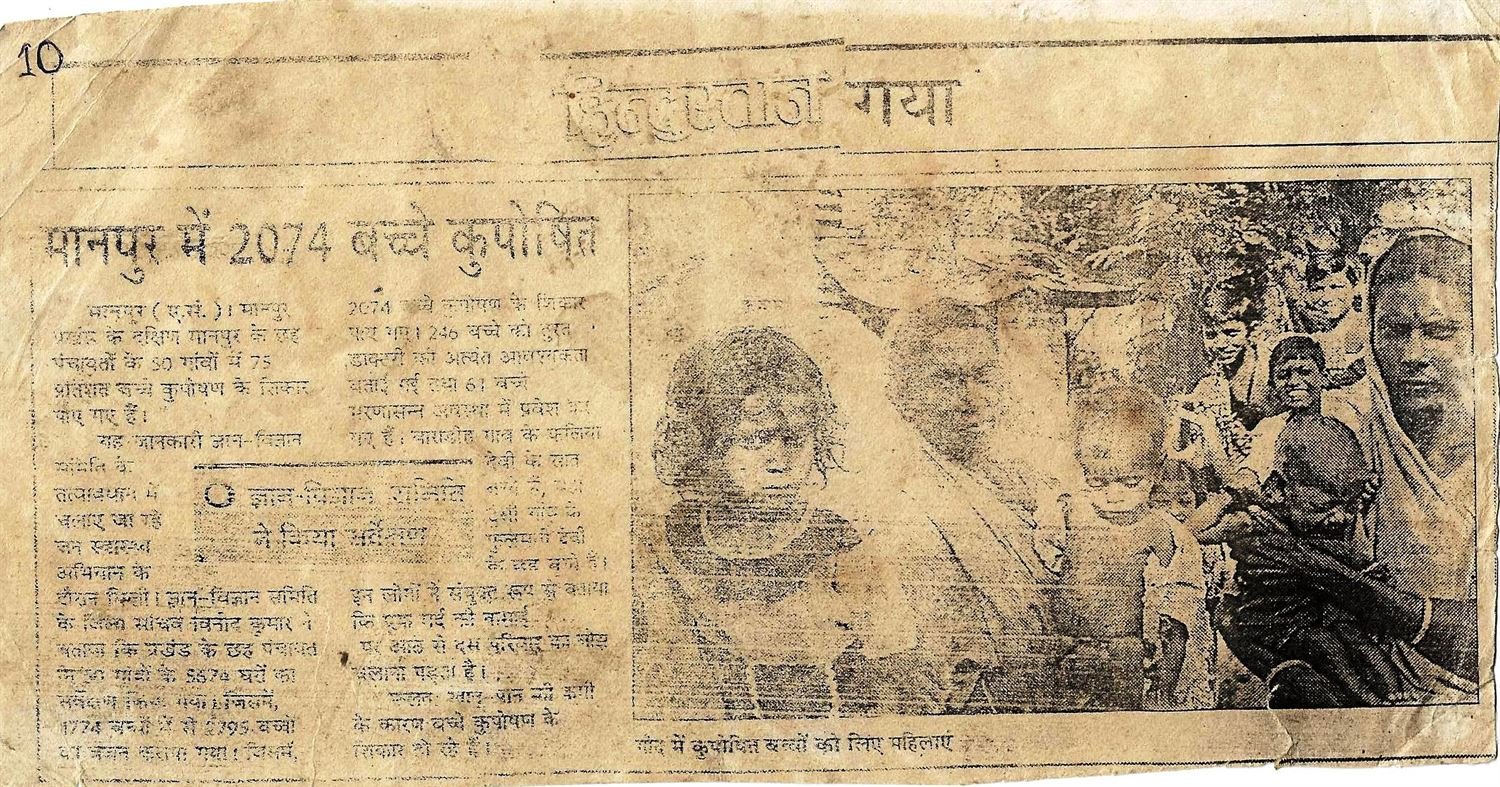
2,074 children malnourished — 75%. 246 needing immediate treatment; 61 in a dying condition.2,074 बच्चे कुपोषित — 75%। 246 को तत्काल इलाज की ज़रूरत; 61 मरणासन्न।
60 villages, 6 panchayats 7,071 families60 गाँव, 6 पंचायतें 7,071 परिवार
70% of children malnourished. Of 7,643 children, only 2,079 in the normal category; 1,519 had entered the disease stage; 1,428 ill; 235 needing urgent medical treatment, 32 of them critical; six had already died.70% बच्चे कुपोषित। कुल 7,643 बच्चों में केवल 2,079 सामान्य श्रेणी में; 1,519 बीमारी के स्टेज में; 1,428 बीमार; 235 को अत्यंत आवश्यक डॉक्टरी इलाज, उनमें 32 मरणासन्न; छह बच्चे काल के गाल में समा चुके।
TB, same villagesक्षय रोग, वही गाँव
153 TB patients — 57 women, 96 men. In New Abgilla Pahadtali alone, a village of about 500 people, around 300 TB patients; three deaths in a fortnight, August 2004.153 क्षय रोगी — 57 महिला, 96 पुरुष। अकेले न्यू अबगिला पहाड़तली में, लगभग 500 की आबादी वाले गाँव में, तीन सौ के आसपास टीबी मरीज़; अगस्त 2004 में एक पखवारे में तीन मौतें।
Chand block, Kaimurचांद प्रखंड, कैमूर
52% of children malnourished, and 35% of people's income going on medicines.52 प्रतिशत बच्चे कुपोषित, और लोगों की आय का 35 प्रतिशत दवा पर ख़र्च।
One name, followed to the endएक नाम, अंत तकIn August 2004 the samiti's survey named Ruby Khatoon, then 25, as a TB patient of some years “जिसे इलाज के अभाव में केवल कंकाल बचा हुआ है” — reduced by lack of treatment to a skeleton. In September 2005 the press reported her death, “इलाज के अभाव में”. She had a small child. The samiti's record follows her case to its end.अगस्त 2004 में समिति के सर्वेक्षण ने रूबी खातून का नाम लिया था — तब 25 वर्ष की, वर्षों से टीबी की मरीज़, “जिसे इलाज के अभाव में केवल कंकाल बचा हुआ है”। सितम्बर 2005 में अख़बारों ने उनकी मृत्यु की ख़बर छापी — “इलाज के अभाव में”। उनका एक छोटा बच्चा था। कोई सर्वेक्षण पढ़ता रहे, तो वह ऐसा दिखता है।
“2,074 children malnourished in Manpur” — with the sub-head “Survey conducted by Gyan Vigyan Samiti”.“मानपुर में 2074 बच्चे कुपोषित” — और वह उपशीर्षक जो मायने रखता है: ज्ञान-विज्ञान समिति ने किया सर्वेक्षण।
A Speaker of the Assembly, for health workers
स्वास्थ्य कार्यकर्ताओं के लिए, विधानसभा अध्यक्ष
On 23 December 2006, at the Primary Health Centre campus at Manpur block headquarters, the samiti's Gaya unit held a felicitation ceremony for rural health workers. It was inaugurated by Shri Uday Narayan Chaudhary, Speaker of the Bihar Legislative Assembly, who honoured 70 rural health workers with certificates. Former Union Minister Upendra Nath Verma attended.
23 दिसम्बर 2006 को, मानपुर प्रखंड मुख्यालय स्थित प्राथमिक स्वास्थ्य केन्द्र परिसर में, समिति की गया शाखा ने ग्रामीण स्वास्थ्य कार्यकर्ता सम्मान समारोह आयोजित किया। उद्घाटन बिहार विधानसभा अध्यक्ष श्री उदय नारायण चौधरी ने किया और 70 ग्रामीण स्वास्थ्य कार्यकर्ताओं को प्रमाण पत्र देकर सम्मानित किया। पूर्व केंद्रीय मंत्री उपेन्द्र नाथ वर्मा उपस्थित रहे।
It was reported by Hindustan and Prabhat Khabar the same day, and the photograph ran in the Urdu press as well.
उसी दिन हिन्दुस्तान और प्रभात खबर में रिपोर्ट छपी, और छायाचित्र उर्दू अख़बार में भी गया।
And the scale it was meant to reachऔर जिस पैमाने तक पहुँचना थाAt the Jan Swasthya Sabha 2000 district seminar at Gaya, the samiti resolved to run health seminars in at least 100 blocks of Bihar and Kala Jatha programmes in 10–15 districts, with a house-to-house survey in 30 villages of every block. A coordination committee was formed under Dr. Ramjatan Sharma. The five-block survey report presented there concluded that health centres and sub-centres “केवल दिखावे के लिए रह गये हैं” — are left only for show.गया में हुई जन स्वास्थ्य सभा 2000 की ज़िला संगोष्ठी में समिति ने बिहार के कम से कम 100 प्रखंडों में स्वास्थ्य सेमिनार और 10–15 ज़िलों में कला जत्था कार्यक्रम चलाने का निर्णय लिया, साथ ही हर प्रखंड के 30 गाँवों में घर-घर सर्वेक्षण का। डॉ. रामजतन शर्मा की अध्यक्षता में समन्वय समिति बनी। वहाँ प्रस्तुत पाँच प्रखंडों की सर्वेक्षण रिपोर्ट का निष्कर्ष था कि स्वास्थ्य केन्द्र और उपकेन्द्र “केवल दिखावे के लिए रह गये हैं”।
The clippings
कतरनें
Click any clipping to read it full size.
पूरा पढ़ने के लिए किसी भी कतरन पर क्लिक करें।
Child welfareबाल कल्याण
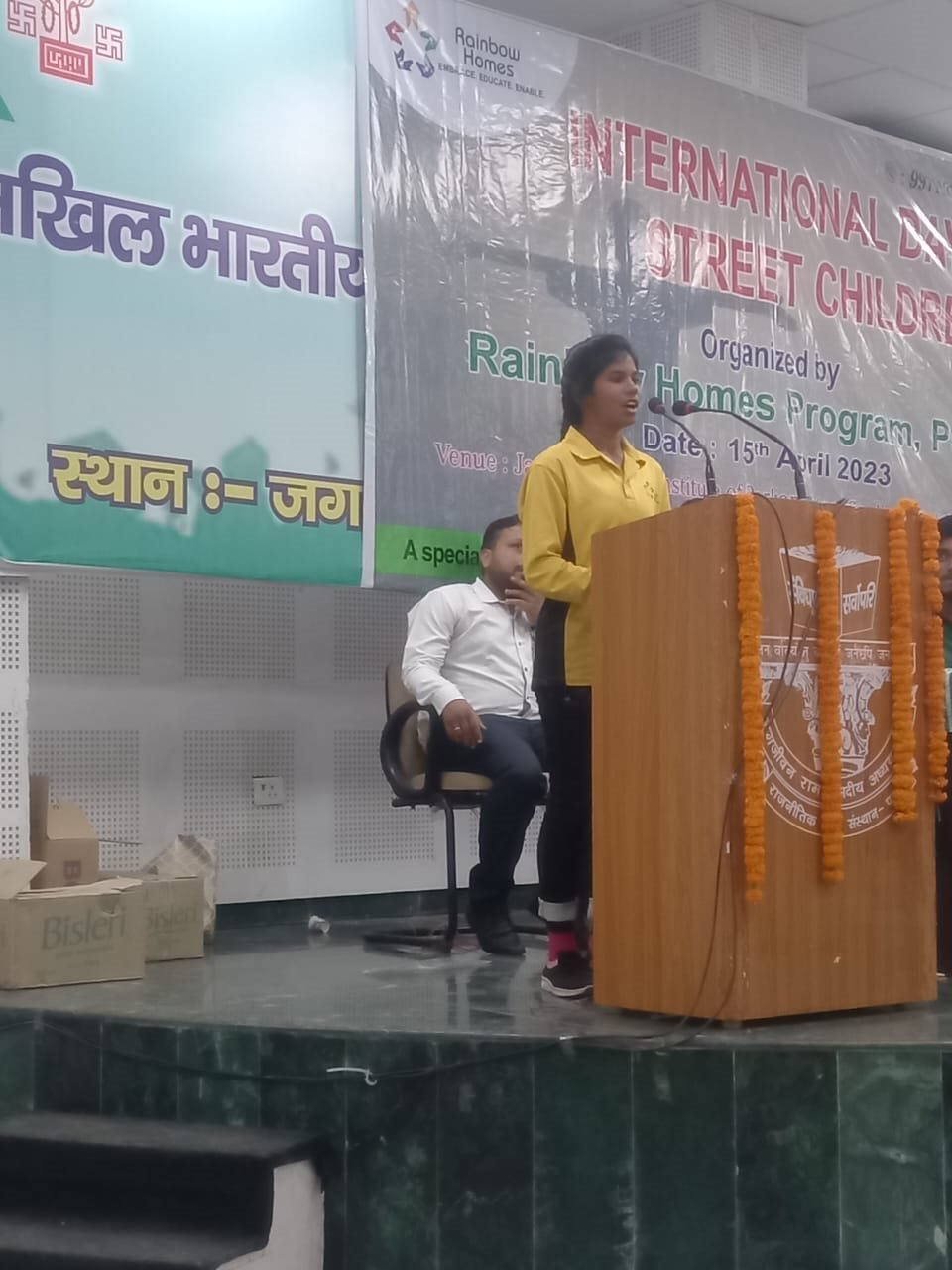
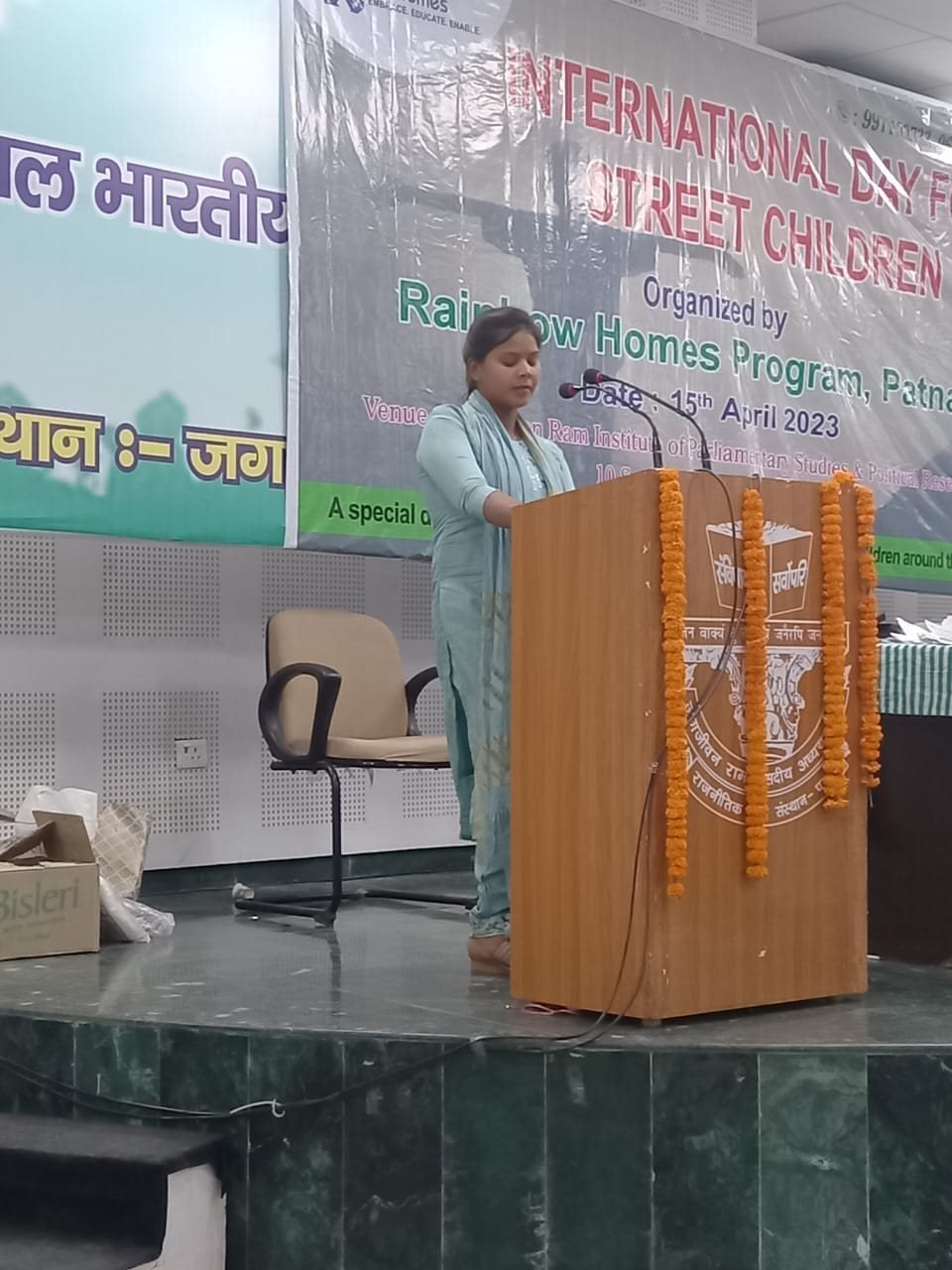
GVS Rainbow Home, Patna
जीवीएस रेनबो होम, पटना
A residential home run by the samiti with Rainbow Home India, providing care, education and emotional support for children who were formerly street-connected. Around 50 children live there at present.
समिति द्वारा रेनबो होम इंडिया के साथ चलाया जाने वाला आवासीय गृह, जो पहले सड़कों पर रह रहे बच्चों को देखभाल, शिक्षा और भावनात्मक सहारा देता है। इस समय वहाँ लगभग 50 बच्चे रहते हैं।
There are in fact two homes. The first began operating in 2012; in 2014 a second opened for boys — Snehghar, at Kumhrar, Patna. By 2018 the samiti was running a skill development programme for the girls living in the home.
असल में दो गृह हैं। पहला 2012 में शुरू हुआ; 2014 में बालकों के लिए दूसरा खुला — स्नेहघर, कुम्हरार, पटना। 2018 तक समिति गृह में रह रहीं बच्चियों के लिए skill development कार्यक्रम चला रही थी।
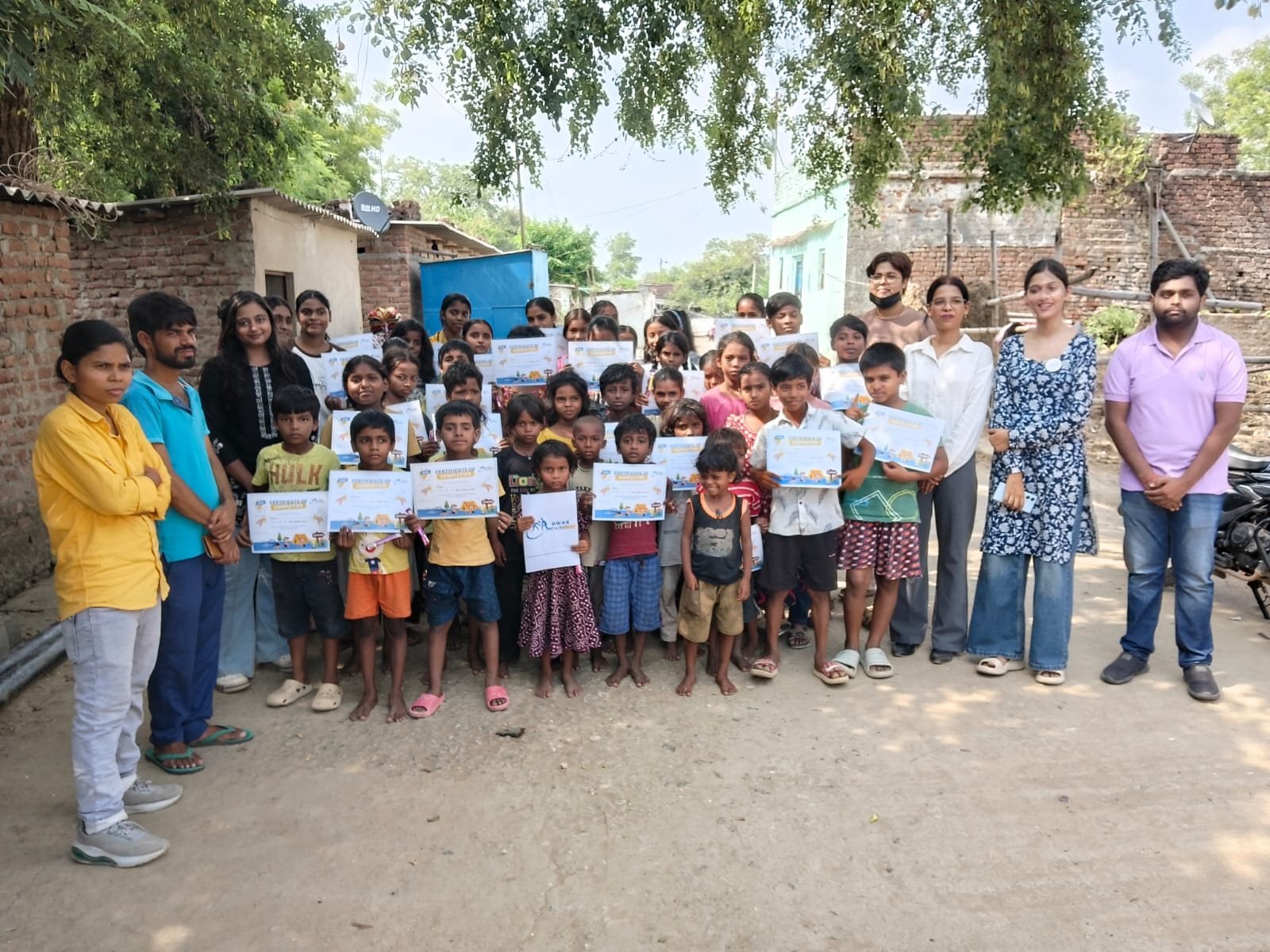
Learning centre, Jalalpur, June 2026.शिक्षण केन्द्र, जलालपुर, जून 2026।
How it is funded
इसका संचालन कैसे होता है
Currently by the Rainbow Home Foundation together with individual donations. No corporate CSR funding is drawn for it at present, although the samiti holds 12A, 80G and CSR-1 registration and is eligible to receive it.
वर्तमान में रेनबो होम फ़ाउंडेशन तथा व्यक्तिगत दानदाताओं से। फ़िलहाल इसके लिए कोई कॉरपोरेट CSR निधि नहीं ली जाती, जबकि समिति के पास 12A, 80G और CSR-1 पंजीकरण है और वह इसे प्राप्त करने की पात्र है।
The national programme
राष्ट्रीय कार्यक्रम
The National Rainbow Homes Programme runs 48 homes and 22 community centres across 10 cities, Patna among them. More than 12,000 children have been reached since 2002, with around 5,601 currently in care.
राष्ट्रीय रेनबो होम्स कार्यक्रम 10 शहरों में 48 गृह और 22 सामुदायिक केन्द्र चलाता है, जिनमें पटना भी शामिल है। 2002 से अब तक 12,000 से अधिक बच्चों तक पहुँच बनी है, और इस समय लगभग 5,601 बच्चे देखभाल में हैं।
Each of these is named in the samiti's own 2010 publication, with the year it ran and, in most cases, the number of districts it covered. They are not slogans — they are programmes with budgets, funders and completion dates.
इनमें से हर एक समिति की अपनी 2010 की पुस्तिका में नाम सहित दर्ज है — किस वर्ष चला, और अधिकांश मामलों में कितने ज़िलों में। ये नारे नहीं हैं — ये बजट, वित्तपोषक और समाप्ति-तिथि वाले कार्यक्रम हैं।
जीवनशाला
Jeevan Shala · 1996–2001
An innovative programme in primary education, run for five years from 1996 and funded by the Ministry of Human Resource Development. Three primers were written for it.
प्राथमिक शिक्षा में नवाचारी कार्यक्रम, 1996 से पाँच वर्षों तक, मानव संसाधन विकास मंत्रालय के सहयोग से। इसके लिए तीन प्राईमर लिखे गए।
जनता का स्वास्थ्य जनता के हाथ
People's health in people's hands · 1998→
Funded by the Ministry of Health, Government of India in 1998, and still running as workshops in 23 districts in 2003 and 2006. The strategy, in the samiti's words, was to place people's health in people's own hands.
1998 में भारत सरकार के स्वास्थ्य मंत्रालय द्वारा वित्तपोषित, और 2003 तथा 2006 में भी 23 ज़िलों में कार्यशालाओं के रूप में जारी। समिति के शब्दों में — जनता का स्वास्थ्य जनता के हाथ सौंपने की रणनीति।
आकाश का मजा · अंतरिक्ष दर्शन
The joy of the sky · 1997–98
Science-dialogue programmes that took people out to look at the night sky — run in 23 districts in 1998. The samiti describes it as taking society on a tour of space, closer to the world of planets, constellations and stars. It is the same instinct that produced the 2009 eclipse festival.
विज्ञान संवाद कार्यक्रम, जो लोगों को रात के आकाश तक ले गए — 1998 में 23 ज़िलों में। समिति इसे “समाज को अंतरिक्ष की सैर कराना” कहती है। यही प्रवृत्ति 2009 के सूर्य ग्रहण उत्सव तक पहुँची।
समता कला जत्था
Samata Kala Jatha · 1993→
Samata was constituted out of BGVS in 1993 and funded by MHRD in 1996–97, with training of trainers by UNICEF Patna in 2001–02. Its Kala Jatha, in the samiti's own account, “महिलाओं का परंपरावादी सोच तोड़कर और घुंघट हटाकर चाहरदिवारी से बाहर की दुनिया का दर्शन कराया” — “broke women's traditional thinking, lifted the veil and showed them the world outside the four walls”.
समता का गठन 1993 में भारत ज्ञान विज्ञान समिति से हुआ, 1996–97 में मानव संसाधन विकास मंत्रालय का सहयोग मिला, और 2001–02 में यूनिसेफ़ पटना ने प्रशिक्षक-प्रशिक्षण को निधि दी। समिति के अपने विवरण में — इसने “महिलाओं का परंपरावादी सोच तोड़कर और घुंघट हटाकर चाहरदिवारी से बाहर की दुनिया का दर्शन कराया”।
स्कूल भरो अभियान
Fill the schools · 1999
An enrolment drive across 32 districts, alongside Bal Mela in 38 districts and the formation of teachers' clubs the same year.
32 ज़िलों में नामांकन अभियान, उसी वर्ष 38 ज़िलों में बाल मेला और शिक्षक क्लब के गठन के साथ।
पुस्तकालय एवं जनवाचन आन्दोलन
The library and public-reading movement · 2001→
The samiti's 2010 account records that when it began in 1991, “जनवाचन की परम्परा लुप्तप्राय थी” — the tradition of public reading was almost extinct, and no library movement existed. Janvachan ran in 30 districts by 1995 and 28 by 2001; the library movement began in 2001.
समिति का 2010 का विवरण दर्ज करता है कि 1991 में जब शुरुआत हुई तो “जनवाचन की परम्परा लुप्तप्राय थी” और कोई पुस्तकालय आन्दोलन नहीं था। 1995 तक जनवाचन 30 ज़िलों में और 2001 तक 28 ज़िलों में चला; पुस्तकालय आन्दोलन 2001 में शुरू हुआ।
देश को जानो – देश को बदलो
Know the country, change the country · 1994–95
Run in 33 districts in 1994 and 30 districts in 1995. The samiti describes it as giving people unity, a sense of cultural identity and an understanding of their heritage.
1994 में 33 ज़िलों और 1995 में 30 ज़िलों में। समिति इसे लोगों को एकता, संस्कृति की पहचान और विरासत की समझ देने वाला कार्यक्रम बताती है।
महिला विज्ञान उत्सव
Women's science festival · 1995, 2000
Held in 100 villages each across 24 districts in 1995, and again as workshops in 28 districts in 2000.
1995 में 24 ज़िलों के 100-100 गाँवों में, और 2000 में फिर 28 ज़िलों में कार्यशालाओं के रूप में।
अनाज बैंक एवं युवा संवाद
The COVID-19 response · 2020
In May and June 2020 the samiti constituted grain banks during the pandemic. On 31 March it had already held a state-level Yuva Samvad (youth dialogue) online over Zoom, with 72 participants from 15 districts: on the role of young people in a pandemic, on carrying correct information to people and refuting false and misleading news, and on using social media well. Awareness work continued through virtual meetings.
मई और जून 2020 में समिति ने महामारी के दौरान अनाज बैंक का गठन किया। 31 मार्च को वह ज़ूम पर ऑनलाइन राज्यस्तरीय युवा संवाद कर चुकी थी, जिसमें 15 ज़िलों के 72 प्रतिभागी शामिल हुए: महामारी में युवाओं की भूमिका, सही ख़बर लोगों तक पहुँचाना और ग़लत तथा भ्रामक ख़बरों का खंडन, तथा सोशल मीडिया का सदुपयोग। जागरूकता का काम virtual बैठकों के ज़रिए चलता रहा।
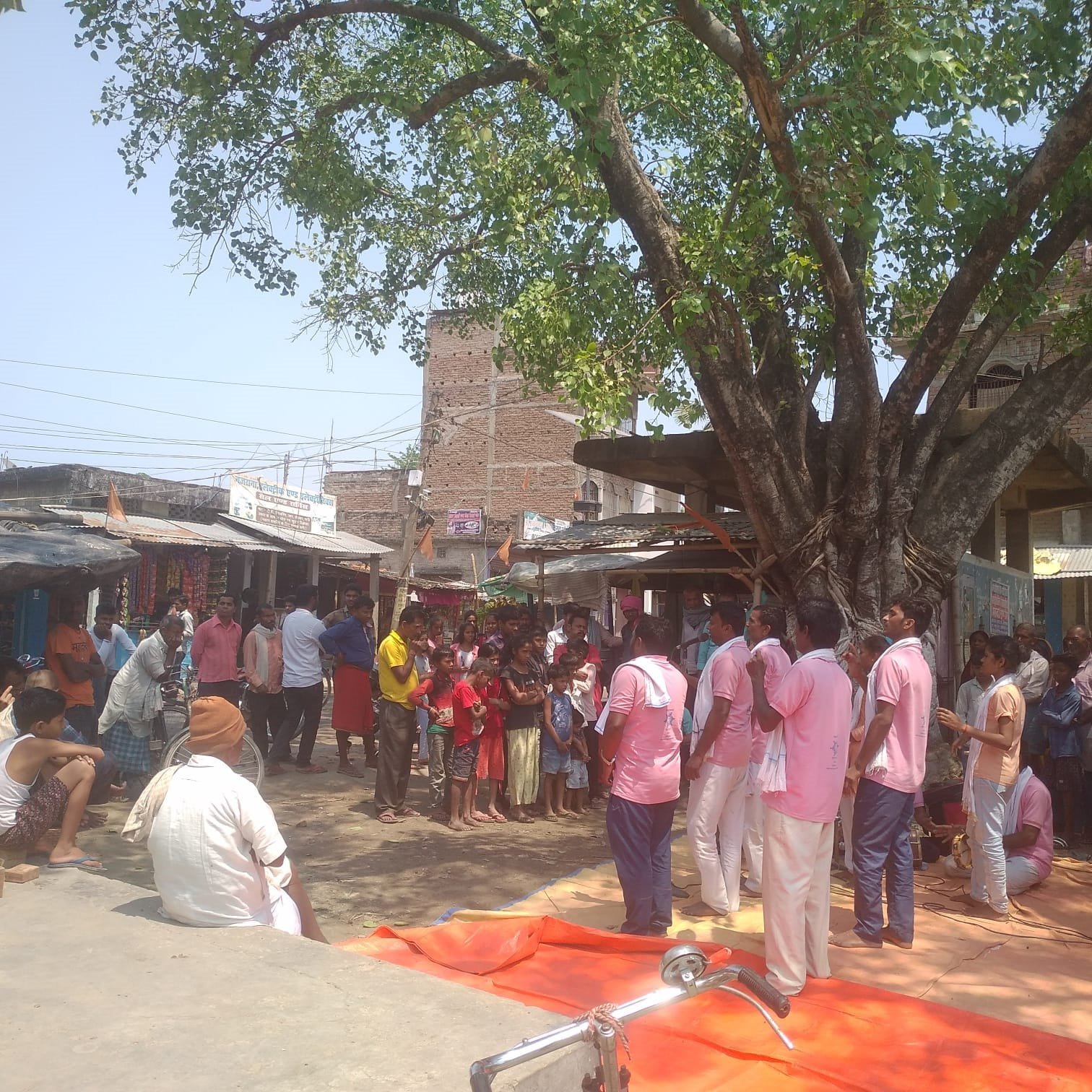
Kala Jatha, Gaya, April 2023. Thirty-three years after the first 40 troupes were formed, the method is still the method: a troupe, a village square, a dholak, and whoever gathers.कला जत्था, गया, अप्रैल 2023। पहले 40 दलों के गठन के तैंतीस वर्ष बाद भी पद्धति वही है: एक दल, गाँव का चौराहा, एक ढोलक, और जो भी जुट जाए।
Two eclipses of a different kindदूसरी तरह के दो ग्रहणThe 2009 Surya Grahan Utsav was not a one-off. In 2012 the samiti ran a daytime sky-viewing programme in Gaya district for the Transit of Venus, with filter glasses and a poster exhibition. Venus will not cross the face of the Sun again until 2117. The same instinct runs back to Antariksh Darshan in 23 districts in 1998 and Aakash ka Maza in 1997.2009 का सूर्य ग्रहण उत्सव कोई एक बार की बात नहीं थी। 2012 में समिति ने गया ज़िले में शुक्र पारगमन के लिए दिवाकालीन आकाश दर्शन कार्यक्रम चलाया — चश्मे और पोस्टर प्रदर्शनी के साथ। शुक्र अब सूर्य के सामने से 2117 से पहले नहीं गुज़रेगा। यही प्रवृत्ति 1998 के 23 ज़िलों के अंतरिक्ष दर्शन और 1997 के आकाश का मजा तक जाती है।
Kala Jatha, by the numbersकला जत्था, आँकड़ों में1990 — 40 troupes formed across the panchayats of 36 districts of undivided Bihar. 1991 — 29 troupes from Kerala perform in 29 districts. 1993 — eight national women's Kala Jathas tour 32 districts. 2010 — a national Kala Jatha production workshop under art directors from the National School of Drama. 2026 — the Rohtas district executive forms six Kala Jatha sub-committees.1990 — अविभाजित बिहार के 36 ज़िलों की पंचायतों में 40 दलों का निर्माण। 1991 — केरल से आए 29 दलों का 29 ज़िलों में प्रदर्शन। 1993 — आठ राष्ट्रीय महिला कला जत्थों का 32 ज़िलों में भ्रमण। 2010 — नेशनल स्कूल ऑफ ड्रामा के कला निर्देशकों के निर्देशन में राष्ट्रीय कला जत्था निर्माण कार्यशाला। 2026 — रोहतास ज़िला कार्यकारिणी ने कला जत्था की छह उपसमितियाँ बनाईं।
Every programme on this page is run by district and block units, not by a head office. If you want to start a Bal Manch, a literacy centre or a Kala Jatha troupe, the district secretary is where it begins.
इस पृष्ठ का हर कार्यक्रम ज़िला और प्रखंड इकाइयाँ चलाती हैं, कोई मुख्यालय नहीं। यदि आप बाल मंच, साक्षरता केन्द्र या कला जत्था दल शुरू करना चाहते हैं, तो शुरुआत ज़िला सचिव से होती है।